

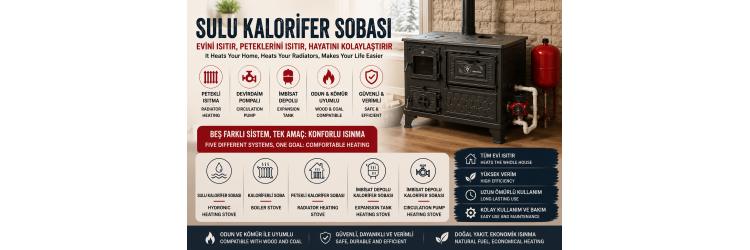
What Is a Hydronic Heating Stove?
As energy costs continue to rise, more homeowners are looking for reliable and economical heating solutions that provide comfort throughout the entire home. One of the most practical alternatives is the Hydronic Heating Stove, also known as a Boiler Stove. Unlike a conventional wood stove that only heats the room where it is installed, a hydronic heating stove transfers heat to water, allowing connected radiators to warm multiple rooms at the same time.
This type of heating system has become increasingly popular in detached houses, country homes, mountain cabins, farmhouses and other properties where natural gas is unavailable or where homeowners prefer the warmth and independence of solid fuel heating.
By combining traditional wood or coal heating with a modern hydronic radiator system, homeowners can enjoy both direct radiant heat and whole-house comfort using a single appliance.
What Is a Boiler Stove?
A boiler stove is a solid fuel appliance equipped with a water jacket or built-in boiler section. While burning wood or coal, the appliance produces heat that warms both the room and the water circulating inside the heating system.
The heated water is transported through insulated pipes to radiators installed throughout the home. As the radiators release heat into each room, the cooled water returns to the stove where it is heated again, creating a continuous heating cycle.
This makes a boiler stove an ideal solution for homeowners who want central-style heating without depending on natural gas or expensive electrical heating systems.
How Does a Hydronic Heating Stove Work?
The operating principle is remarkably simple yet highly efficient.
Wood or coal burns inside the combustion chamber, producing thermal energy. Part of this energy heats the stove body, providing direct warmth to the room. Another part is transferred to the water stored inside the hydronic section of the stove.
Once the water reaches operating temperature, it begins circulating through the heating system. Warm water flows into each connected radiator where it transfers heat into the surrounding air.
After cooling down, the water returns to the stove through the return line to be reheated again. This cycle continues as long as the stove remains in operation.
Because heat is transported by water rather than warm air, the temperature remains more balanced throughout the house.
Why Choose a Radiator Heating Stove?
Traditional stoves usually create a very warm living room while bedrooms and distant rooms remain significantly cooler.
A radiator heating stove solves this problem by distributing heated water through the entire radiator network.
Instead of trying to move warm air between rooms, the heating system transports hot water directly to each radiator.
This approach provides more even temperatures throughout the home and improves overall comfort during cold winter months.
The Importance of the Circulation Pump
One of the most critical components of every hydronic heating system is the circulation pump.
The circulation pump continuously moves heated water from the stove to the radiator system. Without proper circulation, heat would remain concentrated around the stove, leaving distant radiators much cooler.
A correctly sized circulation pump helps maintain stable water flow, allowing every radiator in the system to receive warm water consistently.
This not only improves heating performance but also increases the overall efficiency of the complete installation.
Professional installation of the circulation pump is essential to ensure reliable and safe operation.
What Does the Expansion Tank Do?
Water naturally expands when heated. Since hydronic heating systems are closed circuits, the additional water volume must be safely accommodated.
This is the role of the Expansion Tank.
The expansion tank absorbs changes in water volume as temperatures rise and fall, helping maintain stable pressure throughout the heating system.
Together with the circulation pump, it supports smooth and efficient operation while contributing to the long-term durability of the installation.
Wood or Coal?
Modern boiler stoves are generally designed to operate with both firewood and coal.
Dry hardwood provides fast ignition, attractive natural flames and clean combustion.
Coal generally burns longer and may produce higher sustained temperatures, making it a preferred choice in extremely cold climates.
Choosing high-quality fuel improves efficiency, reduces soot accumulation and helps maintain cleaner chimney operation.
Cast Iron Construction
Premium boiler stoves frequently feature cast iron combustion chambers, cast iron doors and cast iron cooking surfaces.
Cast iron stores heat exceptionally well and continues releasing warmth even after the fire becomes smaller.
Its durability also makes it an excellent material for heating appliances expected to operate throughout many winter seasons.
Fireplace Style Designs
Today's homeowners often expect more than heating performance.
Fireplace-style boiler stoves combine excellent heating capacity with elegant aesthetics. Large heat-resistant ceramic glass panels allow users to enjoy the natural beauty of the flames while maintaining safe operation.
These models create a warm atmosphere similar to a traditional fireplace while simultaneously heating the home's radiator system.
Range Cooker Boiler Stoves
Many hydronic heating stoves also include a practical cooking surface.
This allows homeowners to boil water, prepare meals, brew tea and keep food warm while heating the house.
Especially in rural homes and off-grid locations, a range cooker boiler stove provides exceptional versatility by combining heating and cooking in one appliance.
Safety First
Like every solid-fuel heating appliance, a boiler stove should always be installed by qualified professionals.
The chimney, expansion tank, circulation pump, safety valve and heating installation must all be designed according to local regulations.
Regular chimney cleaning, annual inspections and routine maintenance significantly improve both safety and heating performance.
Hydronic heating systems should always be installed by qualified professionals.
Radiators are not included with the stove.
Radiators, piping, fittings and installation services should be planned separately according to the building's heating project.
Advantages of a Hydronic Heating Stove
A hydronic heating stove offers far more than simply warming the room where it is installed. By combining traditional solid-fuel heating with a radiator system, it delivers comfortable warmth throughout the home while reducing the need for multiple heating appliances.
One of the greatest advantages is the ability to heat several rooms using a single heat source. Instead of relying on electric heaters or additional stoves, the heat generated by burning wood or coal is transferred through the radiator network.
This makes hydronic heating stoves an economical and practical choice for homeowners looking for reliable heating during the winter season.
- Heats multiple rooms from one appliance.
- Compatible with both wood and coal.
- Provides direct radiant heat and radiator heating simultaneously.
- Suitable for detached homes and rural properties.
- Long service life thanks to durable cast iron components.
- Available with fireplace-style ceramic glass.
- Many models include practical range cooker surfaces.
- Can reduce overall heating costs when used correctly.
Where Can a Boiler Stove Be Used?
Hydronic heating stoves are suitable for a wide variety of residential and small commercial applications.
- Detached houses
- Country homes
- Mountain cabins
- Farmhouses
- Holiday homes
- Weekend cottages
- Small workshops
- Single-family residences
- Properties without natural gas service
These systems are designed primarily for individual residential heating and should not be confused with large commercial central heating boilers.
Choosing the Right Boiler Stove
Selecting the correct boiler stove depends on several important factors including the size of the building, insulation quality, ceiling height, climate conditions and the total number of radiators connected to the system.
Choosing a model that matches your home's heating requirements improves efficiency and provides better comfort throughout the heating season.
A properly sized appliance also contributes to longer equipment life and more stable operation.
Installation and Professional Setup
Although hydronic heating systems operate using a relatively simple principle, correct installation is extremely important.
The circulation pump, expansion tank, safety valve, piping and chimney should always be installed by experienced professionals.
Proper commissioning ensures correct water circulation, stable operating pressure and efficient combustion.
Routine maintenance and periodic inspections help extend the life of both the stove and the complete heating installation.
Maintenance Tips
Keeping your boiler stove in excellent condition requires only basic routine maintenance.
- Clean the ash chamber regularly.
- Use dry firewood or high-quality coal.
- Inspect the chimney periodically.
- Check the circulation pump during the heating season.
- Inspect radiator valves and pipe connections.
- Have the complete system serviced before winter.
Simple maintenance not only improves efficiency but also contributes to safer operation year after year.
Frequently Asked Questions
Can one boiler stove heat an entire house?
Yes. When connected to a properly designed radiator system, a boiler stove can provide heat to multiple rooms within a single-family home.
Does the stove work with both wood and coal?
Most modern hydronic heating stoves are designed for both wood and coal, allowing homeowners to choose the most suitable fuel.
Why is a circulation pump necessary?
The circulation pump keeps heated water moving throughout the radiator network, helping maintain balanced temperatures in all connected rooms.
What is the purpose of an expansion tank?
The expansion tank compensates for the natural expansion of heated water and helps maintain stable system pressure.
Can I cook on a boiler stove?
Many models include a cast iron cooking surface that can be used for boiling water, preparing meals and keeping food warm.
Are fireplace models only decorative?
No. Fireplace-style models combine efficient heating performance with an attractive view of the flames through heat-resistant ceramic glass.
Are radiators included?
No. Radiators, piping and installation materials are supplied separately according to the heating project.
How often should the chimney be cleaned?
Regular chimney cleaning is recommended to maintain efficient combustion and safe operation throughout the heating season.
Can these systems replace natural gas heating?
In many detached homes and rural properties, a properly designed boiler stove system provides an effective alternative where natural gas is unavailable.
How long can a cast iron boiler stove last?
With proper installation, quality fuel and regular maintenance, a cast iron boiler stove can provide reliable heating for many years.
Final Thoughts
A Hydronic Heating Stove combines the timeless warmth of a traditional wood stove with the comfort of a modern radiator heating system. Instead of heating only one room, it distributes warmth throughout the home by circulating hot water to connected radiators.
Whether you choose a Boiler Stove, a Fireplace Boiler Stove, a Range Cooker Boiler Stove, an Expansion Tank Boiler Stove or a Circulation Pump Boiler Stove, the result is the same: efficient, economical and dependable heating for your family.
At Umay Stove, we manufacture durable hydronic heating stoves built with quality materials, cast iron components and reliable engineering. Our products are designed to deliver efficient heating, long service life and comfortable living throughout the winter season.
✔ Hydronic Heating Stoves
✔ Boiler Stoves
✔ Radiator Heating Stoves
✔ Expansion Tank Boiler Stoves
✔ Circulation Pump Boiler Stoves
✔ Fireplace Boiler Stoves
✔ Range Cooker Boiler Stoves
Explore the complete Umay Stove collection and choose the heating solution that best fits your home.
